Tuesday, 3 March 2015

Emigration from Liverpool on the ship The Henry Clay to New York 1846

This poignant letter and lock of hair tells part of the story of the emigration, from the port of  Liverpool on the ship The Henry Clay, of Thomas Tait and his family.  Probably a Scottish family Thomas Tait sends a lock of his ?daughter's hair via a Mr.Wm.MacKinlay to her grandmother as the family were to sail the next day. It is sad that no more is known about this family, and no news either whether they even set off because it is known that the ship The Henry Clay was ship wrecked off the New jersey coast during March of the same year (1846). The letter mentions the  sailing would be on the morning of 23rd July 1846.

Friday, 7 November 2014

Hollar, Wenceslaus/Vaclav, Mulierum 1643.....etcher supremo!

Etchings from Hollar's Mulierum 1643. This is a fashionable woman from Naples.
Etchings from Hollar's Mulierum, London 1643.  This is a fashionable woman from London.
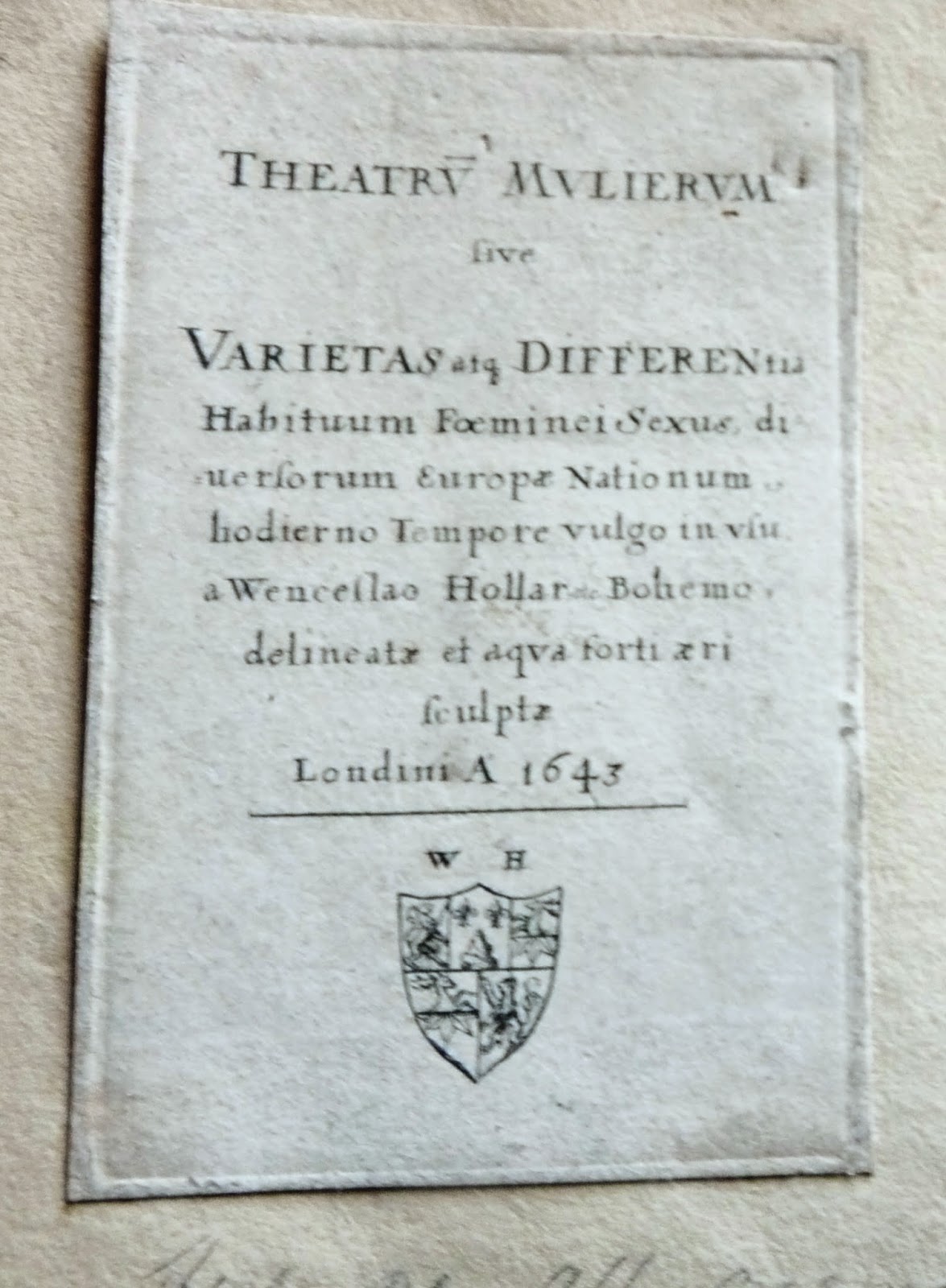
This is the title page of the 1643 edition of Hollar's Mulierum. Wenceslaus or Vaclav Hollar was a Bohemian etcher.       Born in Prague 13th July, 1607, he died in London on 25th March 1677, buried at St.Margaret's Church, Westminster. His earliest works are dated 1625-6. He was greatly influenced by Durer. In 1633 he moved to Cologne where he produced some his best works. In 1636 he attracted the notice of the famous nobleman and art collector Thomas Howard the 21st Earl of Arundel . He travelled with Arundel to Vienna and Prague and returned with him, and  remaining in the Earl's household for many years. After 1646 he earned his living by working for various authors and publishers. Hollar created  "View of Greenwich" during his first  year in England. The plate measured nearly 3 feet long, and he was paid 30/- for this. Throughout the English Civil War he worked in Antwerp where he produced some of his best known works. he illustrated many books. After the Great Fire of London he produced some of his famous "Views of London". The King sent him to Tangier in 1668. He lived for a further 8 years still working for booksellers including a large plate of Edinburgh dated 1670. He died on 25th March 1677, and was buried at St. Margaret's Church, Westminster, London in 1677  sadly, in dire poverty.
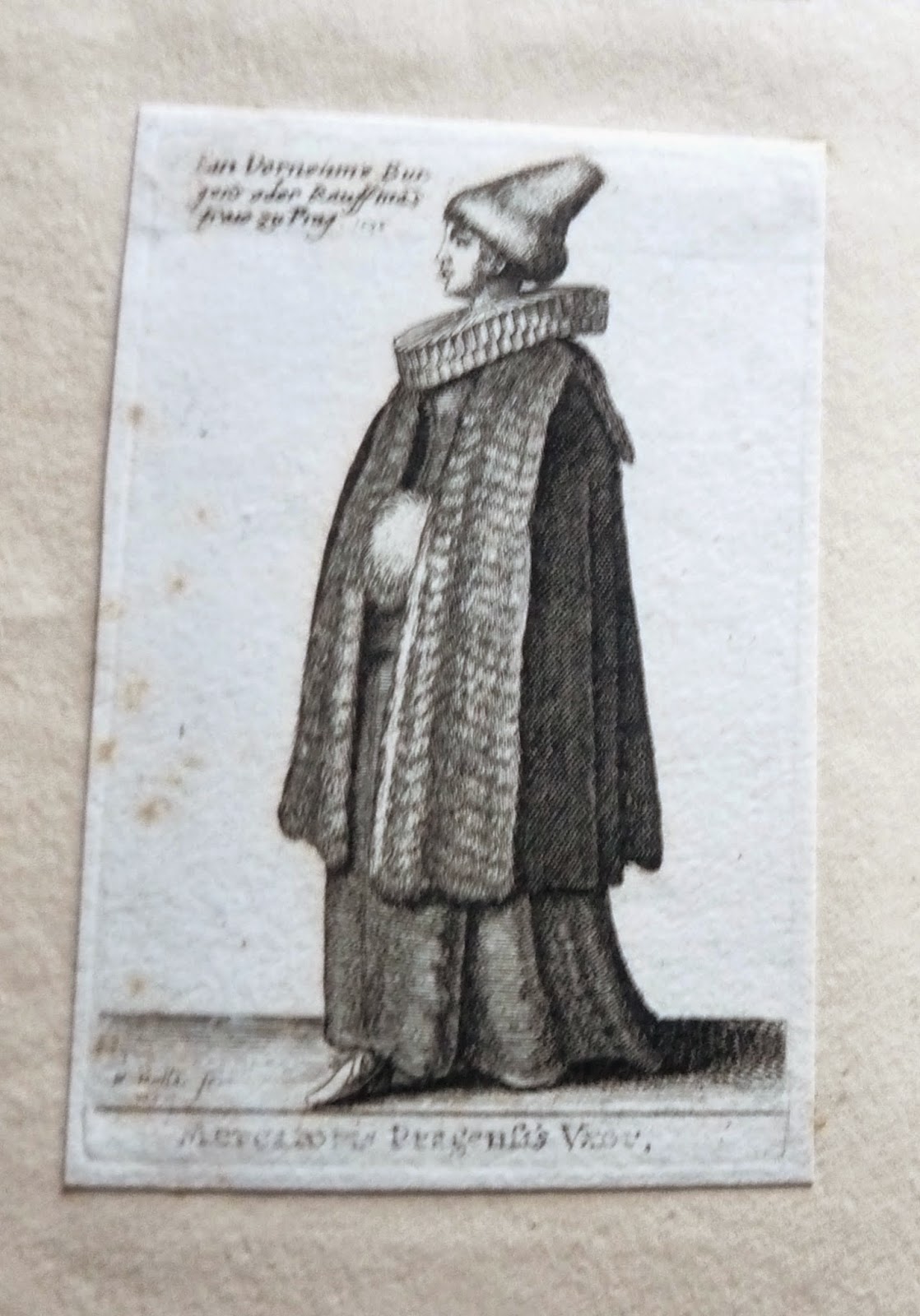
Etching from Hollar's Mulierum 1643, a fashionable woman from Prague.


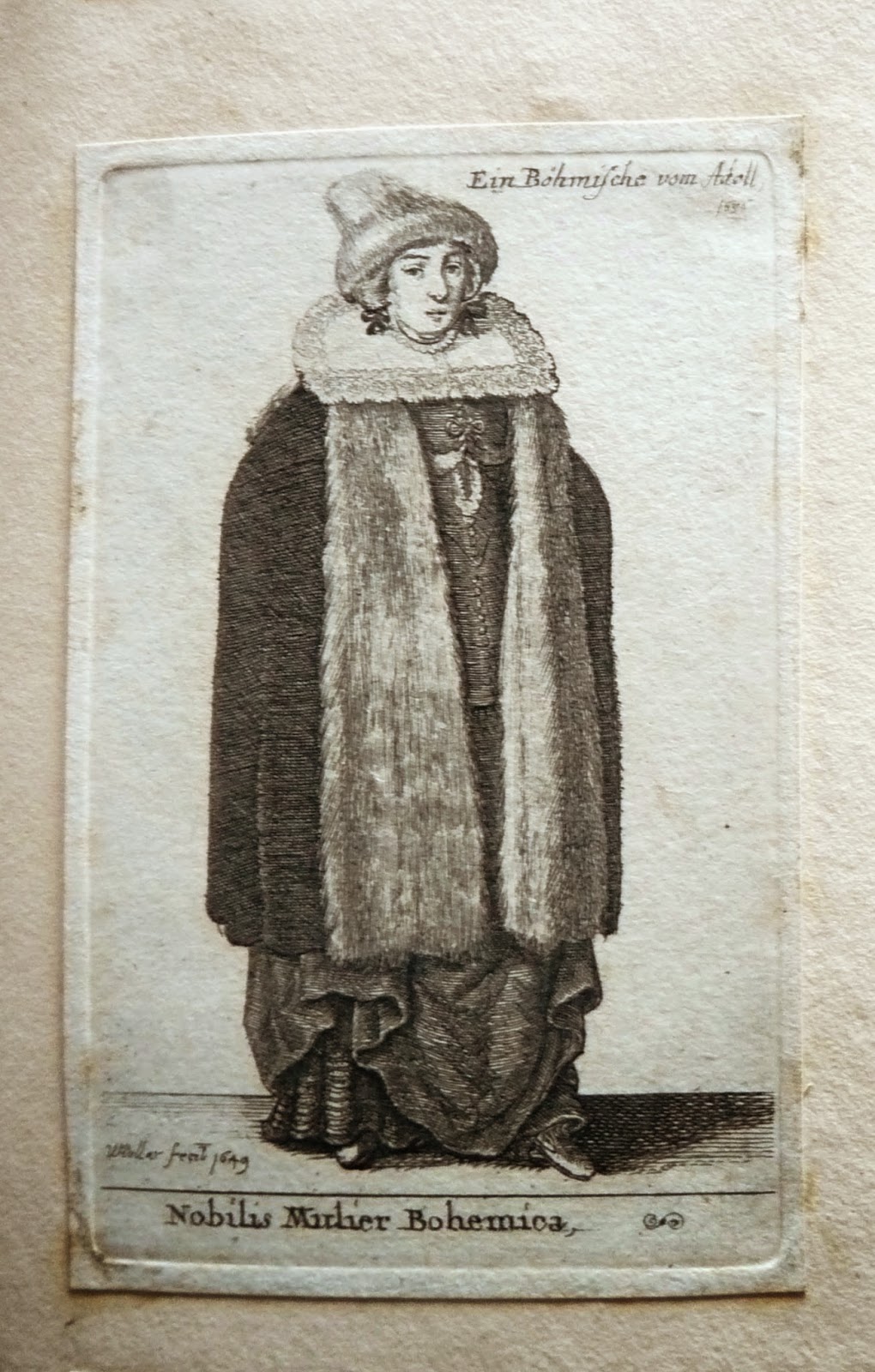
Fashionable woman from Bohemia. Etching from Hollar's Mulierum 1643.

Monday, 3 November 2014

Cranes migrate South over France November 2014

Cranes fly South across France early November.

A Wood Tiger moth.


A colourful wood tiger moth rests on a geranium leaf on my bedroom windowsill. Usually seen from May to July on heaths scrubby grassland and in open woodland. It's food is a wide range of low growing plants.

Tuesday, 28 October 2014

St Benoit du Sault, some images of a beautiful ancient French village in Indre.

This is a 16th century building altered in the 1920s, now a lovely deco style cafe in St. Benoit du Sault, France, Indre. The interior surprisingly  now in the 1970s' style!  This village is noted as one of the most beautiful in France. Situated in the department of Indre (central France) it is full of 15th/16th century buildings. The town is not spoilt by posh little boutiques or any signs of having 'arrived', it was built on a hill and has spectacular views of the Indre countryside, and looks like a fairytale town as you approach it.
House for sale in village!

Very old dog belonging to the Billards cafe takes his morning walk!.

Street,  St. Benoit du Sault.
Street St Benoit du Sault.

Ancient doors St Benoit du Sault, and mixture of red brick and stone wall.

Ancient painted door, St Benoit du Sault.

Lovely old window with shutters St Benoit du Sault.

Narrow stone passageway St Benoit du Sault.

Ancient tiny stone window St Benoit du Sault.

3 storey house St Benoit du Sault.

Tuesday, 22 July 2014

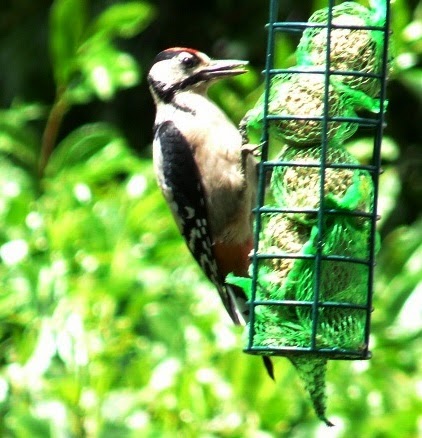
A great spotted woodpecker my garden!

This is a photograph of a juvenile great spotted woodpecker.  Great spotted woodpeckers have a vivid black and white pattern with a  flash of red feathers under the tail and the juvenile has a red forehead that is replaced by black in Autumn.